What Front Porches Know That Modern Homes Forgot
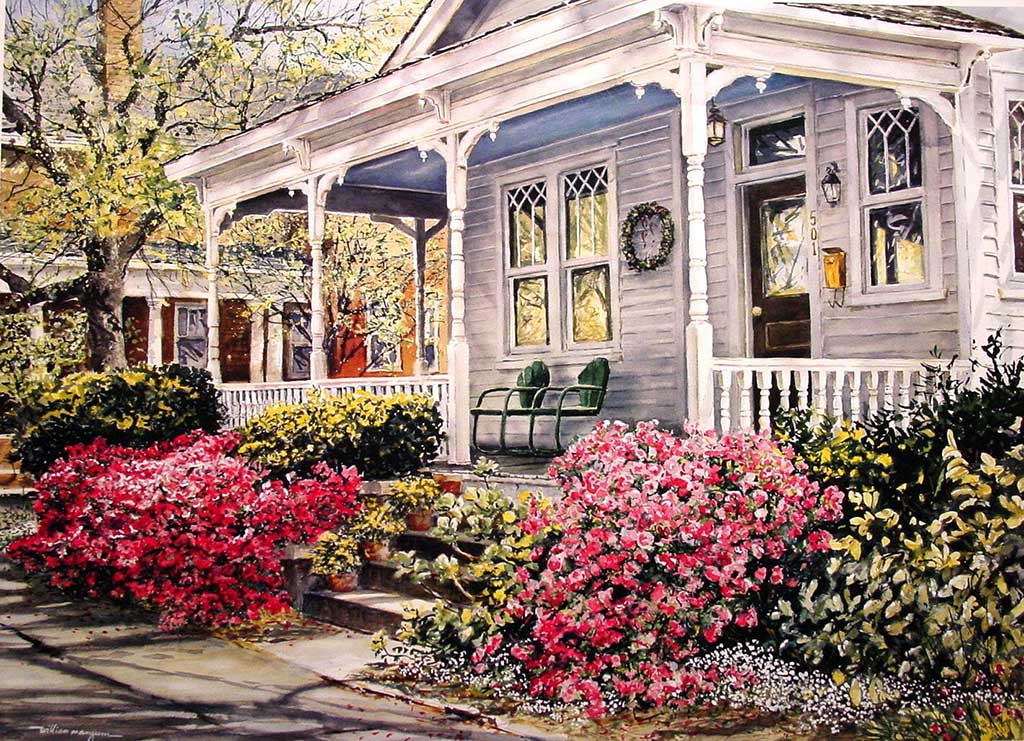
There’s a reason front porches matter.
My husband and I are currently in the process of buying a second home in the Carolinas. We wanted a warm seaside escape, but choosing the right home mattered just as much as the location itself. New construction was certainly an option, but in the end, we settled on a sweet 30-year-old ranch in a charming coastal community.
Although the new builds were shiny and pristine, something about them left me feeling cold. I knew what elements I liked, but I couldn’t quite put my finger on why this older home felt so different. I just knew it made my heart sing, which has always been my criteria for any major purchase.
One of the standout features of the house was the large covered front porch. Ever since I was a child, I’ve loved a beautiful front porch. I remember desperately wanting one for our family home and being thrilled when my parents finally added one to our Cape Cod-style lake house.
Still, I couldn’t fully explain why this home appealed to me more than the new construction homes until I recently watched a video discussing the disappearance of front porches in favor of what are often called “snout houses” — tract homes where the garage protrudes forward as the dominant architectural feature.
I’ve never found those homes particularly inviting. There’s something off-putting about driving through a neighborhood where all you see are rows of garages with tiny stoops tucked off to the side. Those entryways seem designed for little more than a package drop-off and maybe one decorative chair.
But front porches once served an important purpose. They weren’t just a place to cool off in the summer before air conditioning existed, they also created opportunities for neighbors to interact and build community.
As air conditioning became common and families spent more time indoors gathered around televisions, front porches slowly disappeared. Builders could construct homes faster and more cheaply without them, and over time, garages became the focal point instead.
What surprised me most, however, was learning that studies have shown neighborhoods with front porches often experience lower crime rates. People are more visible, more connected, and more likely to know their neighbors. Eyes naturally stay on the street.
Because of this, some communities in places like Seaside, Portland, and Austin have begun prioritizing front-porch-centered design or discouraging “snout house” architecture altogether. The goal isn’t just aesthetics, it’s creating stronger, happier, more connected communities.
I’ve seen this play out in my own life.
One of the things that originally drew me to our primary home was its charming front porch, and it has absolutely served its purpose. I love sitting outside and waving as neighbors walk by. Without question, it’s far easier to strike up conversations and build relationships when people are regularly outside and visible to one another.
The same thing happened during the inspection of our new coastal home. Within minutes, we met neighbors simply because they were sitting outside on their porch and started chatting with us. Every home in this neighborhood has a front porch, and the area is incredibly walkable, so I suspect many more introductions will happen the exact same way once we settle in.
Now I feel even more strongly about the value of a front porch. What once appealed to me purely for its beauty now feels meaningful on a much deeper level.
A front porch isn’t just the first thing you see on a home, it’s a place to observe, connect, welcome, and belong. In a world increasingly designed for privacy and isolation, the front porch quietly invites us back into community.